
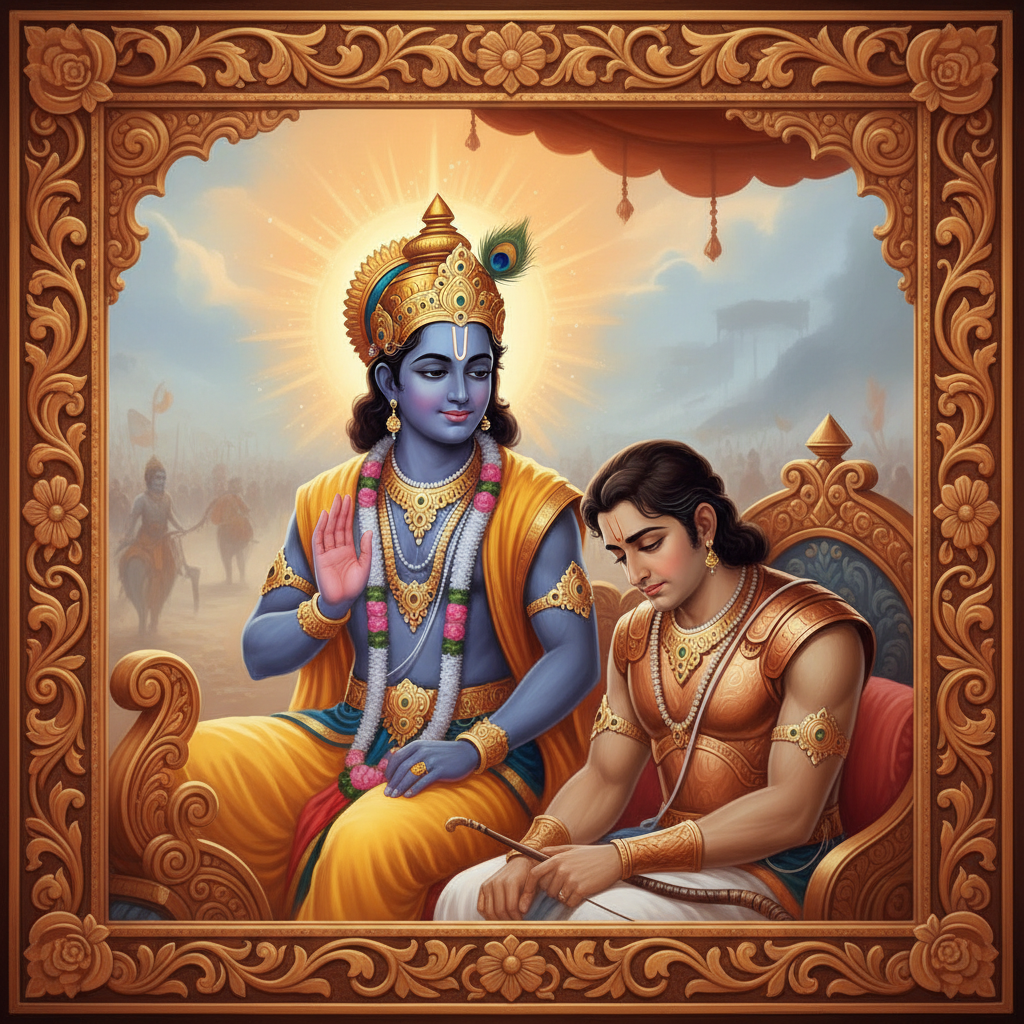
The modern world is characterized by an unceasing pursuit of external validation, sensory pleasure, and material security. Individuals frequently find themselves exhausted by this pursuit, plagued by anxiety and a pervasive sense of lack. The ancient cure for this condition does not involve acquiring more objects or status, but rather turning inward to examine the very instrument of perception: the mind.
In this exposition, Sri Swami Jyotirmayananda—a direct disciple of Swami Sivananda—provides a masterclass on Atmasanjama Yoga, the Yoga of Meditation, as detailed in the Bhagavad Gita Chapter 6. Through his authoritative translation and commentary on verses 20 through 22, Swamiji outlines the definitive path from psychological restlessness to boundless spiritual bliss.

The Inevitable Pursuit of Happiness (00:00)
All living beings are fundamentally lovers of joy. Swamiji asserts a profound Vedantic truth: absolute happiness is synonymous with God. Therefore, no one can truly be an atheist, because everyone inherently believes in and seeks happiness. The distinction among individuals lies not in the desire for joy, but in where they seek it. The ordinary mind looks to the world of illusion, seeking fulfillment through bhoga (worldly enjoyment), thereby binding itself to endless cycles of limitation. The highly advanced mind, however, awakens to the aspiration for apavarga (liberation), recognizing that finite objects can never satisfy an infinite thirst.
The Choice: Duryodhana or Arjuna? (10:40)
To illustrate the predicament of the spiritual aspirant, Swamiji recounts an allegorical episode from the Mahabharata. Before the great war, both Duryodhana (representing the ego-dominated lower self) and Arjuna (representing the pure, inquiring soul) seek Lord Krishna’s assistance. Given a choice between Krishna’s vast, powerful army and the unarmed presence of Krishna himself, Duryodhana hastily chooses the worldly power. Arjuna, however, chooses the Lord alone.
Deep within every individual, these two tendencies coexist. The “Duryodhana” within seeks the glorious expressions of the world—wealth, power, and phenomenal attainments. The “Arjuna” within seeks closeness with the Divine. Choosing the Divine is the path of śreya (blessedness), while choosing the world is the path of preya (pleasantness).
The Three Defects of the Mental Mirror (22:30)
To attain liberation, one must first answer the fundamental inquiry: “Who am I?” Swamiji explains that just as a physical mirror reveals the face, the citta (mind-stuff) acts as an internal mirror reflecting the true Self. However, this mirror suffers from three specific defects that obscure clear vision.
- Mala (Gross Impurities): This is the dust on the mirror, manifesting as anger, greed, and hatred. To clean this dust, the aspirant must practice Karma Yoga (the path of selfless action). Spiritual sadhana is fundamentally tested in the waking state, through daily interactions and challenges. Righteous action purifies the gross mind.
- Vikṣepa (Distraction/Restlessness): Even when the dust is removed, the hand holding the mirror may shake. This shakiness is caused by subtle desires (vāsanās). The cure for this mental agitation is Upāsanā—the combined practice of Bhakti Yoga (devotion) and Dhyāna (meditation). By surrendering to God and focusing the mind to a single point, impure tendencies are replaced by pure ones (śubha vāsanās).
- Āvaraṇa (The Veil of Ignorance): Even with a clean and steady mirror, a veil—like hair falling over the eyes—can block the reflection. This veil of primal ignorance is removed by Jñāna Yoga (the path of knowledge) and the rigorous inquiry into the Self.
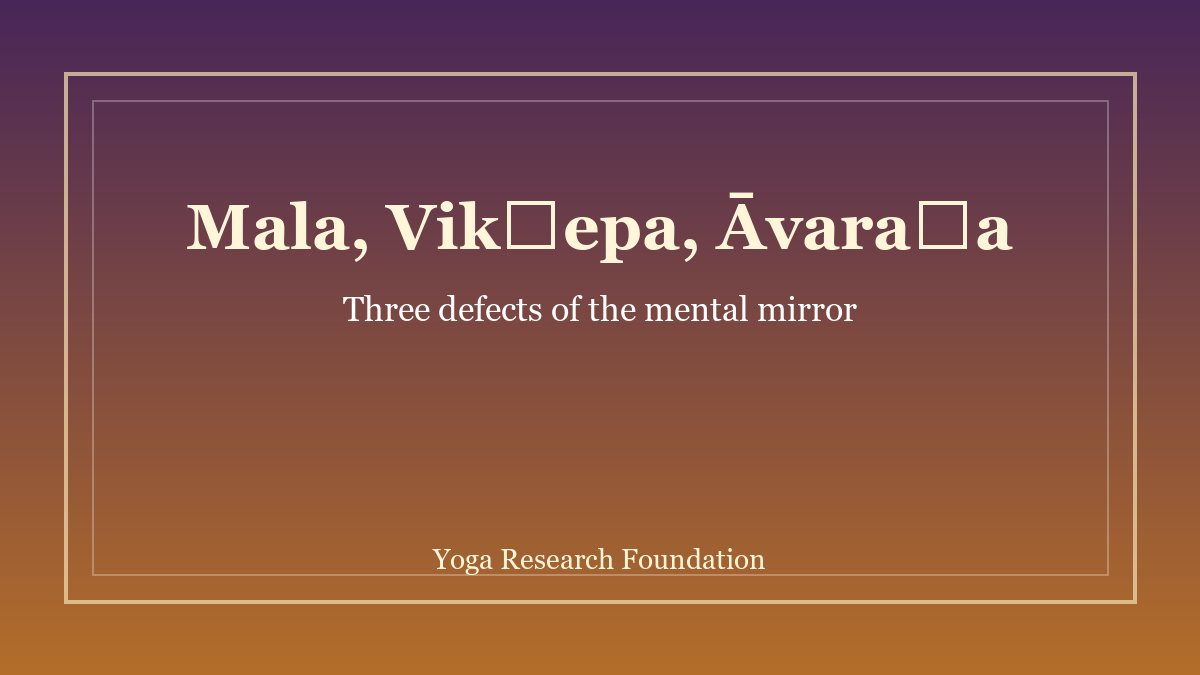
When these three yogas are harmoniously blended in daily life, it is known as Integral Yoga.
Establishing the Self in Boundless Bliss (31:20)
Once the citta is completely purified of mala, vikṣepa, and āvaraṇa, the Yogi experiences ānanda (bliss) that is absolute and boundless. This realization occurs beyond the reach of the ordinary mind and senses; it is grasped by the intuitive intellect.
Swamiji provides a clarifying analogy: Just as the intellect plans and prepares the physical body for sleep, and then completely withdraws once sleep arrives, the purified, intuitive intellect prepares the aspirant for liberation. Once realization dawns, the intellect steps aside, leaving only the pure “I Am.”
In this state, you recognize that you are not the fragile, reflected sun trembling in a bucket of water (the individualized soul trapped in the mind). You are the Sun itself—luminous, ever-present, and completely untouched by the passing clouds of worldly sorrow.
Scholar’s Corner
Bhagavad Gita, Chapter 6, Verses 20-22
“When the mind, disciplined by the practice of Yoga, attains quietude, and when seeing the Self by the self, he is satisfied in his own Self; When he feels that supreme bliss which is perceived by the intelligence and which transcends the senses, and wherein established he never moves from the Reality; And having gained which, he thinks that there is no greater gain than that, wherein established he is not shaken even by the heaviest of sorrow—let that be known as the state of severance from the union with pain. This Yoga should be practiced with determination and with a mind steady and undespairing.”
Glossary of Vedantic Terms
- Citta: The mind-stuff or subconscious mind; the storehouse of memories and impressions.
- Vāsanā: Subtle desires, tendencies, or behavioral traits residing in the subconscious.
- Mala: Gross mental impurities, such as anger, greed, and jealousy.
- Vikṣepa: The tossing or oscillating nature of the mind; mental restlessness.
- Āvaraṇa: The veil of ignorance that conceals the true nature of the Self.
- Pravṛtti: The path of moving outward into worldly involvement and material acquisition.
- Bhoga: Worldly enjoyment and sensory experience.
- Apavarga: Liberation or final emancipation from the cycle of birth and death.
Join the community for daily inspiration.
This study guide is drawn from the archived teachings of Sri Swami Jyotirmayananda.