Bhagavad Gita 84: Love of God Awakens

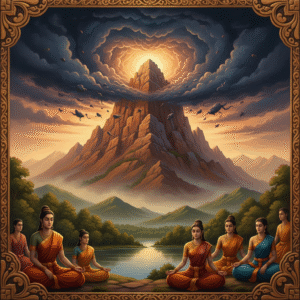
The seventh chapter of the Bhagavad Gita is called Jnana-Vijnana Yoga, and Swami Jyotirmayananda opens this lesson by taking the two words apart. Jnana is knowledge you can hold in the intellect, the way you can know that Mount Everest stands in the Himalayas. Vijnana is the direct experience of bei


Read More »

Tulsi Ramayana 96: What Understanding Sees

Rama has come into King Janaka’s garden to pick flowers for the worship of his teacher, Vishwamitra. Sita has come into the same garden on her way to worship Goddess Parvati. Between them stands a dense hedge of branches, creepers and blossoms, and through all of it, for the first time, they catch s

Read More »

Yoga Vasistha 195: Master of the Senses, Not Their Slave

Sage Uddalaka has already gone into deep relaxation and meditation and created an inner atmosphere of sattva, purity. Now he does something unusual. He lines up his own senses as if they were sitting in front of him, and he speaks to them as their boss. Swami Jyotirmayananda explains why this episod

Read More »

Yoga Vasistha 194: The Wave That Forgot It Was the Ocean

The lecture opens on a complaint that no ocean could make. A surf breaks with a roaring cry, and the ocean says it has been lost. It once rose with a whole family of waves, and now it does not know where to go. Swami Jyotirmayananda reads the verse behind that picture before anything else: “How can

Read More »

One Focus, Four Attitudes: The Remedy for Yoga’s Obstacles

Last week’s class named the nine obstacles that Patanjali lists in sutra 30 of the Samadhi Pada. This one asks what they do to a person, and what can be done about them. It takes in three more sutras. Sutra 31 describes what follows when the obstacles take hold: pain, despair, trembling, and breath

Read More »

Worshipping Other Gods, or the God

The seventh chapter of the Gita has been climbing toward a single verse, and this class begins on it. After many lives of progressive evolution, Krishna says, one acquires wisdom and worships Him with the vision that Vasudeva alone is all that exists, and such a great soul is extremely difficult to

Read More »

Tulsi Ramayana 95: The Stillness Behind Every Thought Wave

Nothing large happens in this lecture. A girl wanders ahead of her companions into a garden, sees two princes, and runs back to tell her friend. Sita goes to look. Rama, picking flowers for his teacher’s worship, hears her bangles before he sees her, and when he does see her, his eyes stop blinking.

Read More »

Yoga Vasistha 193: The Self Cannot Be Confined in the Mind

Sage Uddalaka is not yet realized when this section of the Yoga Vasistha finds him. That is the point of reading him. Swami Jyotirmayananda presents what follows as a sample of how inquiry is actually practiced by someone still on the way, and he is plain about its subject. The inquiry is not into t

Read More »

Yoga Vasistha 192: Uddalaka Reasons With His Own Mind

Sage Uddalaka is not a beginner. The Yoga Vasistha is careful to say so, and Swami Jyotirmayananda is careful to repeat it, because what happens to Uddalaka in this lecture is the thing beginners assume only happens to beginners. His mind is shaken like a tree uprooted in a storm. He falls into a lo

Read More »

Raja Yoga Sutras 17: The Nine Obstacles on the Path

Patanjali spends one sutra naming the nine things that stop a practice, and Swami Jyotirmayananda spends most of an hour on them. Before naming one, he removes the assumption that naming is the cure. You do not get rid of an obstacle because you have learned what it is called. Knowing is the beginni

Read More »

The Devotee Krishna Calls Dearest

Seven days ago Swamiji read the sixteenth verse of the seventh chapter and named the four kinds of people who turn to God. He comes back to it at the start of this class and says why: “because of its importance, I’m reiterating this verse.” The second reading is not a repetition. The first one named

Read More »

Tulsi Ramayana 94: Why Every Path of Wisdom Ends in Play

There is a moment in this class where the whole architecture of the Ramayana quietly inverts. Rama, who is Brahman, under whose governance maya assembles entire universes in an instant, is being led around a building site by a group of children who have decided He does not know very much. They point

Read More »