
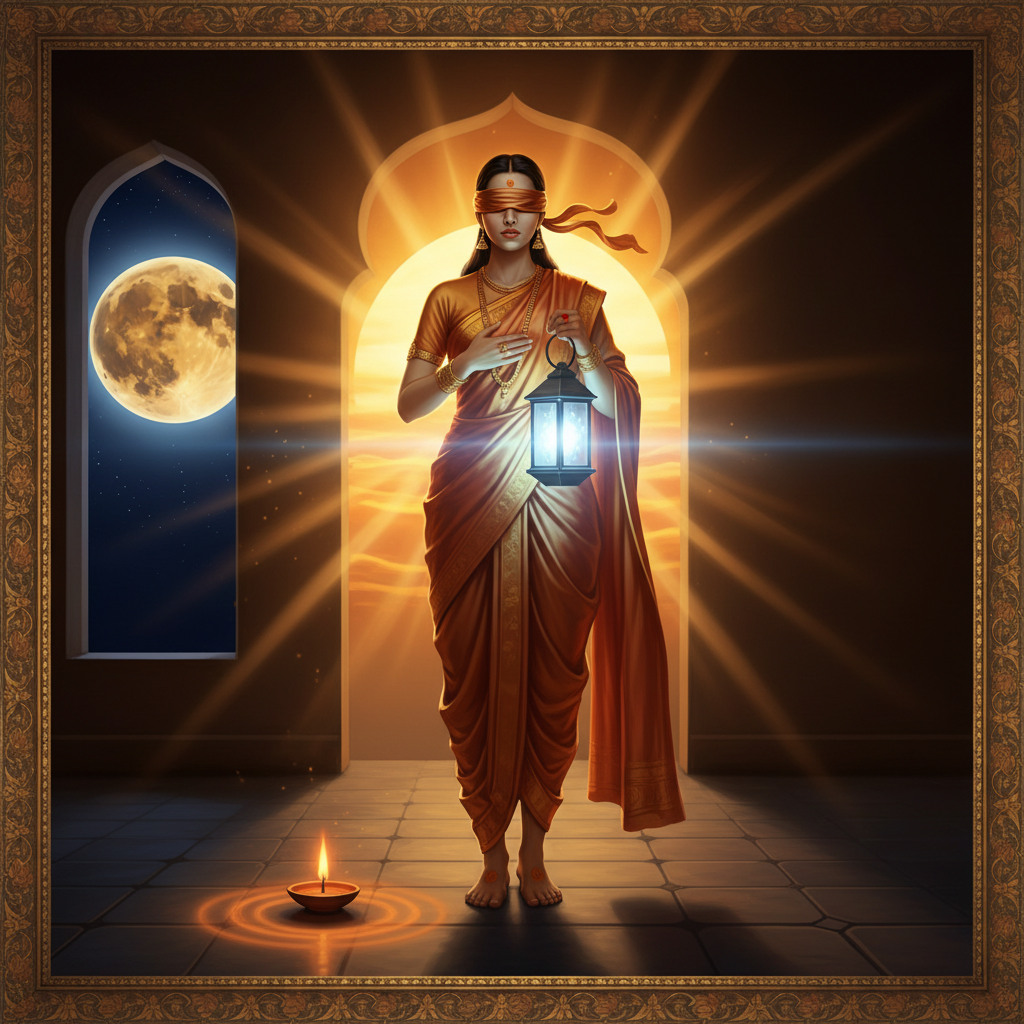
Swamiji opens this class with a sentence he returns to almost fifty minutes later, in the same words: “He is closer to you than your physical heart.”
Everything between those two statements answers the obvious objection. If God is that near, why is the nearness not obvious? And if the scriptures describe God as beyond name, beyond form, beyond division, then what is there to be near to?
The lecture takes up the Tulsi Ramayana at Doha 203, in the middle of the childhood episodes. Rama, Lakshmana, Bharata and Shatrughna are small boys in Dasharatha’s palace, running from their food with yogurt on their faces, delighting three mothers and a court. It is the least doctrinal stretch of the Balakanda, and Swamiji treats it as the most instructive.
His first move is to refuse the reading in which this is a charming story about someone else. The whole story is highly allegorical, he says, and from a profound point of view it is meant for you and you alone. Then the instruction: “So don’t look around; assimilate.”
What follows is a class organized around degrees rather than doctrines. Devotion has degrees. Love has degrees. Nearness has degrees. The illustration that carries the hour is a man blind from birth whose sight is restored in the middle of the night, who mistakes a candle flame for the sun, then a brighter lamp, then the moon, and who falls silent when the sun actually rises.
The class ends by naming the difficulty directly. Having described the Absolute as indivisible and formless, Swamiji says that description produces, in an honest mind, a sense of impossibility. The answer Tulsidas gives is not an argument. It is a picture of a mother bending down to a baby.
The Passages, With Timestamps
- 00:00 The Nearness of God, and the Degrees of Devotion
- 00:46 Invocation, Doha 203, and Why the Story Is Yours Alone
- 06:46 Spiritual Cuteness, and the First Spark of Anuraga
- 11:59 The Man Who Called a Candle the Sun
- 15:03 The Sacred Thread and What It Pledges
- 19:57 The Soul Needs No Education, Only Uncovering
- 22:33 You Are That Rama, and You Need Not Wait
- 25:49 The Four Brothers Are the Four Yogas
- 32:30 Why Rama Hunts the Deer
- 37:37 An Ideal Day, and the Meaning of Charcha
- 41:00 The Absolute Described, and How He Bends Down
- 46:22 Vishvamitra, and the Demons of the Night
Why Tulsidas Writes the Childhood Episodes at All
The invocation names the setting: Śrī Rāmacaritamānasa, the Rāmāyaṇa, Bālakāṇḍa, the first section. Four brothers bring delight to the palace, to King Daśaratha, and to the three mothers, Kauśalyā, Kaikeyī and Sumitrā.
Swamiji then adds the detail that reframes the scene. Countless divine personalities sneak in to watch. Kākabhūṣuṇḍi arrives in the form of a crow. Śiva comes, hiding His moon. Nārada comes.
The obvious response is nostalgia, and Swamiji names it in order to reject it. You may say how wonderful that era was. His counter is that the visitation is not historical but structural: each time a soul moves toward God, that movement is blessed by all.
When you are seated in satsaṅga and Rama’s story is being told, Hanumān is hiding somewhere, and the divine forces present are asking one question, which Swamiji puts as a choice between mokṣa and Indra’s capital. The joke is deliberate and the point is not. A Godward movement is attended, whenever it happens.
Vyakti and Samashti: Why the Work Is Always Individual
Before the story advances, Swamiji inserts the practical teaching that governs the rest. Peace in the world is not an objective thing you can leave running while you attend to yourself. He gives the two terms: every individual is vyakti; the world of all people is samaṣṭi. Both interact, led by karma.
Then the resolution, which is the least comfortable sentence in the class. The answer is not going after samaṣṭi, because that is not in your hand, but going after vyakti, going after yourself.
This is not a withdrawal from the world. It is a claim about leverage. The teaching therefore starts with the first commandment, be good, and only then do good, with the practical instruction that both proceed simultaneously.
The Blind Man and the Sun: Devotion Has Degrees
Swamiji introduces the illustration as a crude one, which is his usual signal that it is about to do a great deal of work.
A man has been blind. Surgery restores his vision, and it happens in the middle of the night. He is eager to see the sun, having heard so much about it. He looks at a candle flame: is this the sun? He finds a brighter light: no, that is the sun. He looks up at the moon: that is the sun. Then: “But when the sun really rises, he says nothing.”
The application is exact. In your life you experience the sweetness of love, profound feelings, sentiments, and when you feel that this is divine, more is waiting. Allow generosity and kindness to develop and a better love arrives, and that too is not the love. They are all from the same Love, but you are not yet enjoying it at its best.
The process continues, Swamiji says, as ego subsides, and when that has happened the cataract has been removed. The test he offers for that stage is a negative one and worth sitting with. If it has come, you do not ask whether He is God, and you do not go looking for authentic people to tell you whether to seek God or something else.
The Sacred Thread as a Pledge of Mind, Speech and Action
The brothers grow up and receive the yajñopavīta-saṃskāra, the sacred thread. Swamiji is uninterested in the sociology and says so, after noting plainly that the ceremony is meant for boys and girls alike and that the old restriction had nothing to do with any real difference.
What he wants is the thread’s three strings. The highlight, he says, is that you are reminded that you live to discipline mind, speech and action, in order to rise beyond tamas, rajas and sattva. That is the pledge you make with the thread.
He places it in a series of sacraments that mark a life: nāma-saṃskāra, the naming; muṇḍana-saṃskāra, the removal of hair; then yajñopavīta, which initiates the student into receiving knowledge under a teacher.
The old schools were not academic. Students went to the forest or to an āśrama and stayed for years, and the initiation carried a second instruction: that you do not belong to one family, but live by the whole society.
Para Vidya: The Soul Was Never Uneducated
The brothers learn quickly, missing no step. Swamiji uses their speed to make a claim about what learning is. God within is the source of all knowledge, and then, flatly: “Your soul doesn’t need to be educated, you have to understand that.”
Schools, colleges and even āśramas are not meant to change your soul but to allow the soul to reveal itself. If the soul has coverings of illusion, remove the illusions, and what is discovered outstrips the Vedas and all scriptures and all knowledge.
The practical consequence he draws is not anti-intellectual. If the soulward movement is highlighted in your personality, the needed knowledge arrives without difficulty, through whatever school or āśrama happens to be instrumental. But hold the proportion: all the knowledge gained from the world is little compared to what you are holding in your own soul.
He closes the section with the scriptural illustration. The disciple studies everything and returns with great vanity. The father, himself a ṛṣi, asks whether he has learned that knowing which everything is known. The son scratches his head and says no. That is parā vidyā.
Tat Tvam Asi: You Are That Rama
Here the class makes its sharpest turn. God is Rama, and Swamiji puts one step further: who is you? Every soul is God. He names the place where listeners stop. How can everybody be God? There was Rama in Tretā-yuga, and you must wait for another age.
Against that: “The real message of the scripture is tat tvam asi. You are that Rāma.” And then: “You don’t have to wait.” The entire Rāmāyaṇa has to operate through you.
Swamiji then describes the predicament honestly. The soul, essentially Brahman, views itself as a human being striving for knowledge as a means to livelihood, without the awareness that the knowledge shining in the soul is the sun itself, not a reflection of it. The soul is ordinarily described as the sun reflected in the mind, but the reflection in reality is the sun.
He puts the contrast in a line that stays: “Human beings bring out carbon dioxide. God breathes out the Vedas.” That a soul with the potential of ahaṃ brahmāsmi wanders from life to life in distress is, he says, the great wonder.
The Four Brothers Are the Four Yogas
The four brothers return from their studies as personifications of vidyā, vinaya, guṇa and śīla.
Rama is vidyā, knowledge, which at its height is jñāna. Bharata is vinaya, devotion, the embodiment of humility. Lakṣmaṇa is guṇa, the spiritual virtues that give strength to a personality, daivī sampad, and Swamiji notes the name itself carries lakṣaṇa, quality. Śatrughna removes anger, hate and the gross impurities, and what appears when the impurities move away is śīla, a special grace.
Restated as practice: Rama is jñāna, Bharata is bhakti, Lakṣmaṇa is the dhyāna and samādhi movement, Śatrughna is karma yoga. All four yogas come together in the four brothers, and the essence of the four brothers is Rama.
Swamiji is careful about the arithmetic later. He says four, but it is actually one yoga in four aspects.
The Bow in the Hand, Not in the Head
The brothers walk the streets of Ayodhyā carrying bow and arrow, and everyone who sees them is captivated. Swamiji reads the weapons: “Bow is your mind, arrows are thoughts.”
Then the correction that makes it a practice rather than a metaphor: “But you don’t hold them in your hand, you held them in your head.” Holding them in the hands means bringing them into practical life. Thought, word and action in harmony.
The captivation of the whole city is given the same treatment. Do not read it as something that merely happened once. If the four yogas are being practised, if the mind is allowed to hold the ideal, then Rama in you draws you to jñāna, Lakṣmaṇa shows you how to have good qualities, Bharata inspires a few tears of love, and Śatrughna removes obstacles. Being all four brothers, life is joyous.
And: “Rāma is as much present today as He was.” Rāma-rājya is available to anyone who advances.
Hunting the Deer: What Happens to a Conquered Fault
Every day the brothers go to the forest to hunt deer for sport, and Swamiji says the meaning is totally different from what it appears. Mṛga means deer, and it is symbolic of going after a mirage. Develop negative qualities and the soul goes after the mirage of the world process. Those qualities have to be hunted down.
Then the line the section exists for. When Rama hunts them down, they become liberated. “So when anger is hunted down by Rāma, it becomes love. When pride is hunted down by Rāma, it becomes humility. Selfishness becomes generosity.”
This is the distinction that separates the teaching from ordinary self-improvement. The deer are shot “not to eat them. To liberate them.” In the storyline the hunted deer discard their bodies and ascend, and Swamiji notes what the allegory rules out: hunting them down is not in vain but purposeful.
He also marks a lesser stage without dismissing it. The graceful way is not the Paraśurāma way, in which you push a fault away and cut it down and it returns. If you lack that sensitivity, then at least work against your negative qualities, and at the advanced stage you develop the art of bringing light to drive out darkness.
Byapaka, Akala, Anisha: the Absolute and the Problem It Creates
The closing verse gives the description. Byāpaka, all-permeating. Akala, indivisible, without head or feet or body. Anīha, without desire, expecting nothing back from what He has created. Aja, unborn. Nirguṇa, beyond the three guṇas, beyond all names and forms.
Swamiji illustrates indivisibility with reflected sunlight. Pour water from one pot into two and the sun appears twice, but the source cannot be divided. The world in which you are divided or multiplied is a world of illusion, and the Absolute is not in that realm.
Then he says what an honest listener feels. If that description enters the mind, there immediately comes a sense of impossibility: I can never have that. God has no hands, no body, so how can you touch Him? How can there be īśvara-darśana, which is your goal?
Bhagata Hetu: God Bends Down
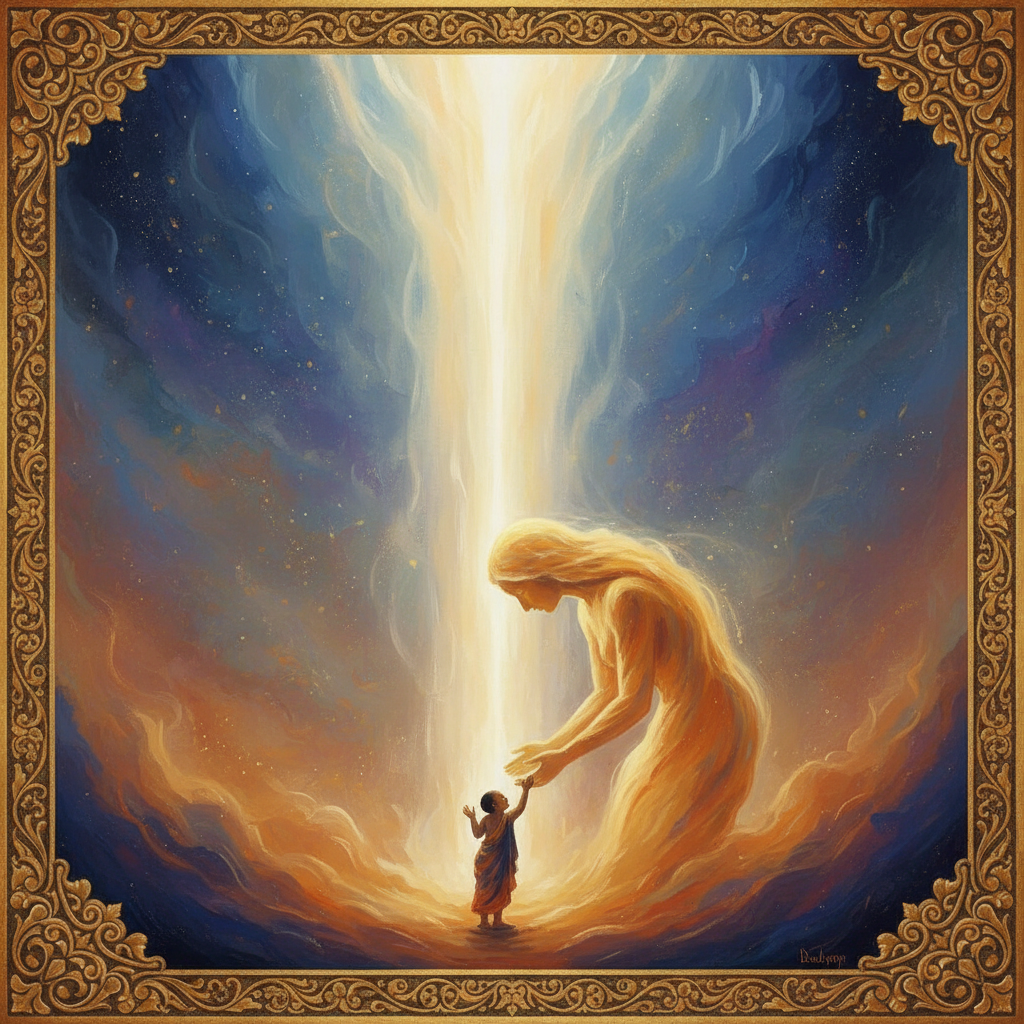
Tulsidas makes it easy, Swamiji says: bhagata hetu, for the sake of the devotee. God leaves behind the throne of eternity, pushes away transcendence, and comes down to the devotee according to that devotee’s capacity to behold Him. A devotee of Rama receives Rama; a devotee of Kṛṣṇa receives Kṛṣṇa. Whatever shines most profoundly in your heart, God takes that form.
The illustration is domestic and deliberately small. A baby calls for its mother, and the mother bends down to catch the baby. In the same way, God bends down.
Swamiji presses the asymmetry. A mother may be a judge, may hold great power, but coming to the baby she herself comes down. He defends the smallness of the example: these simple illustrations are not far-fetched.
And so the class returns to where it began, in the same words. Your relation with God is closer than your relation with your own body. “He is closer to you than your physical heart.”
How is communication with God obtained? The answer is bhakti, devotion, and devotion is a matter of degrees: to the extent devotion advances, to that extent you feel the operation of God through your personality.
Vishvamitra and the Demons of the Night
The last passage turns the teaching from the individual to the collective, and Swamiji says so explicitly. The earlier example was vyaṣṭi in Rama, how He advanced. Now, in society, Viśvāmitra wants to promote that movement.
Viśvāmitra lives in a forest āśrama, and his name means friendliness toward the entire world. Each time he begins a great yajña, demons come. They are called niśācara, and their strength is in the night. Swamiji identifies them: anger, greed and the rest are the demons.
The mechanism of their power is the part to keep: “The more you keep your mind in darkness, greater is the power of these demons.” They flourish, he says, when the mind is given no satsaṅga.
Viśvāmitra reflects and concludes that these demons cannot be destroyed until Rama Himself destroys them, and resolves to ask King Daśaratha for Rama and Lakṣmaṇa. He bathes in the Saryū, proceeds to the palace, and reaches the gates. The class ends there, deliberately, with Swamiji keeping the rest in suspense, and closes on the pūrṇam invocation and oṃ śāntiḥ śāntiḥ śāntiḥ.
Terms Used in This Lecture
- anurāga: love of God; the first spark of being touched by Divine Love
- bhagata hetu: for the sake of the devotee; the reason the Absolute takes form
- byāpaka, akala, anīha, aja, nirguṇa: all-permeating, indivisible, desireless, unborn, beyond the guṇas
- kūṭa: essence; from smashing until the essence comes out
- mṛga: deer, read as the mirage the soul pursues
- niśācara: night-walker; the demons whose strength is in darkness
- parā vidyā: the knowledge by which everything is known
- tat tvam asi: that thou art
- vyakti and samaṣṭi: the individual and the collective
- yajñopavīta-saṃskāra: the sacred-thread ceremony
Questions for Reflection
- Swamiji says the resolution is going after vyakti rather than samaṣṭi, because samaṣṭi is not in your hand. Where in your own life have you been working on the collective in order to avoid working on yourself?
- Which lamp are you currently calling the sun?
- Name one fault you have been pushing away in the Paraśurāma manner. What would it become if it were hunted down rather than suppressed?
Provenance
Tulsi Ramayana (Sri Ramcharitmanas of Goswami Tulsidas), Balakanda, from Doha 203. Lecture 89 by Swami Jyotirmayananda, Yoga Research Foundation. Recorded January 26, 2018.
The complete archive of Swamiji’s teachings is free to listen to.
This study guide is drawn from the archived teachings of Sri Swami Jyotirmayananda.