

Every morning, we wake up and are immediately confronted by the heavy drama of the world. Our minds are pulled in a thousand directions by the demands of our jobs, the fluctuations of our emotions, and the constant friction of interpersonal relationships. This state of constant turmoil and stress is a universal symptom of the modern human condition. We exhaust ourselves trying to squeeze lasting happiness out of temporary situations, yet the underlying anxiety never truly fades.
The ancient cure for this widespread affliction is found in the profound teachings of *Vedanta*. In a brilliant exposition on the Bhagavad Gita, Sri Swami Jyotirmayananda, the last direct disciple of Swami Sivananda, explains how regulating the mind and body leads to the ultimate cessation of pain.
The Illusion of Worldly Success
Many people turn to spirituality or self-improvement simply to become more successful in the material world. While living an ethical life (*Dharma*) certainly leads to greater prosperity and worldly power, Sri Swami Jyotirmayananda warns that this is a *lower understanding* of spiritual practice. Worldly success, no matter how grand, does not put an end to pain; it merely delays it.
We exist in a continuous cycle where we chase after fleeting joys (*Bhoga*). We may secure a great job, build a comfortable home, and surround ourselves with nice things, but because all worldly things are temporary, our attachment to them inevitably results in grief. True spirituality seeks *Apavarga*—liberation from this painful cycle altogether.
The Power of Regulated Action
To achieve this liberation, Bhagavad Gita Chapter 6 Verse 17 prescribes a life of moderation:
“yuktāhāravihārasya yuktaceṣṭasya karmasu / yuktasvapnāvabodhasya yogo bhavati duḥkhahā.”
This profound verse translates to being regulated in food and entertainment, harmonized in performing actions, and balanced in sleeping and waking. When these aspects of life are aligned, yoga becomes a destroyer of sorrow.
When you approach your daily duties with a sense of peace rather than frantic desperation, you practice *Karma Yoga*. If you perform your work with a mind focused purely on the results, you will remain in a state of contradiction and stress. However, if your actions are performed to purify the heart (*Chitta Shuddhi*) and with a spirit of service, the work itself becomes a form of worship.
Transforming Emotion into Devotion
Beyond physical regulation, our emotions must also undergo a profound shift. Shallow emotions keep the heart on a bed of thorns. A minor misunderstanding at the office can ruin your entire day, and you bring that turmoil home to your family.
By directing our inherent capacity for love toward the Divine, we free ourselves from the suffocating grip of infatuation and delusion. Every spark of love experienced in this world should act as an indicator of the supreme love found within the Self. When the mind is filled with this higher love, it stops finding fault in others and takes full responsibility for its own state of peace.
The Climax of Meditation
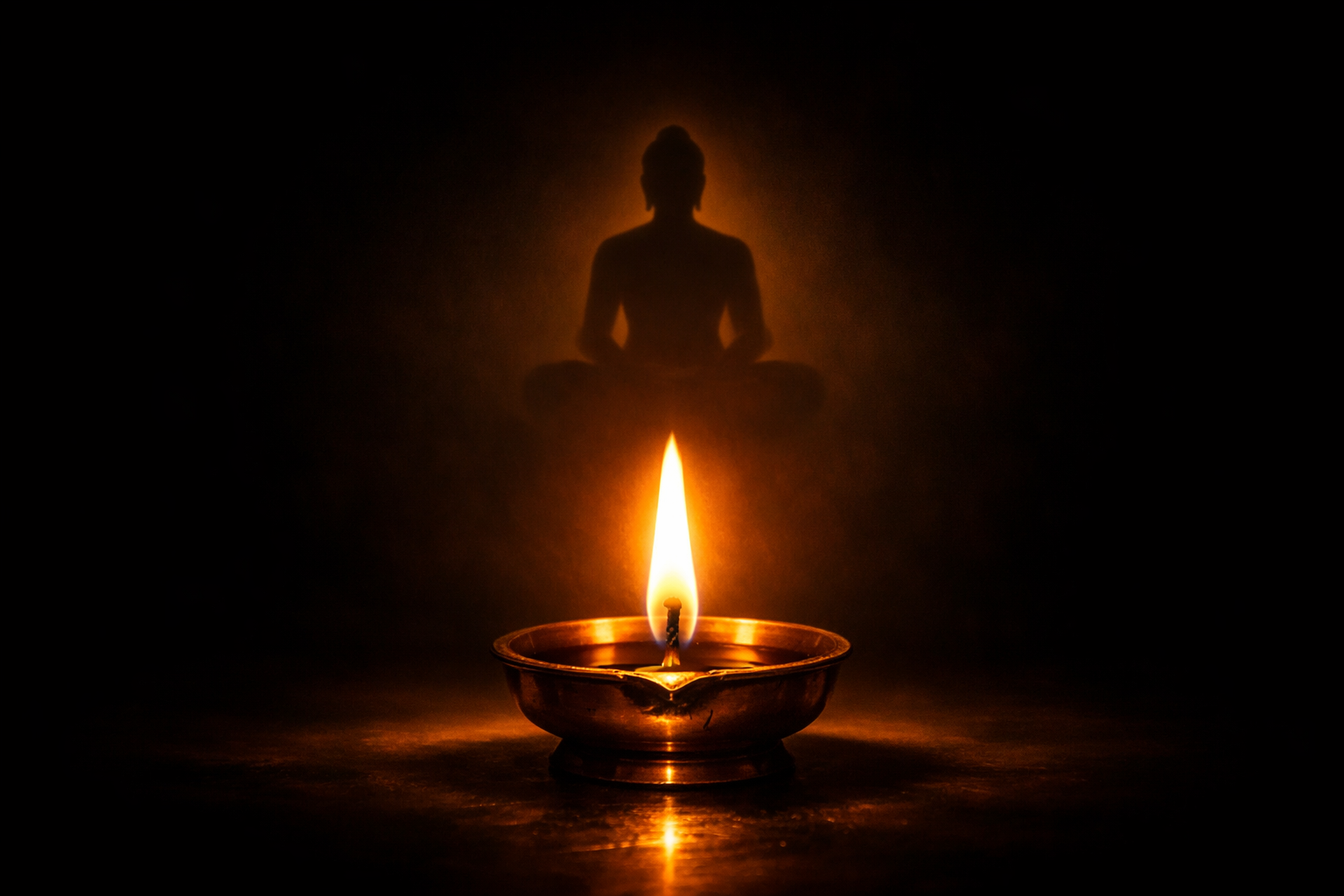
As the mind becomes regulated and the heart purified, concentration naturally flows into meditation (*Dhyana*). Swamiji uses the beautiful scriptural metaphor of a lamp in a windless place. Just as a flame burns steadily when there is no draft, the mind of a Yogi remains completely serene when the winds of desire are absent.
In this state of deep stillness, the mind withdraws from the endless drama of the waking state. You realize that deep down, beyond the ego, the intellect, and the mind, you are absolutely untouched by worldly suffering. Attaining this realization is the ultimate purpose of human existence.
Scholar’s Corner
Scriptural Citations:
- Bhagavad Gita 6.17: The core verse detailing how moderation in all activities destroys sorrow.
- Aham Brahmasmi: “I am Brahman.” The profound realization of the soul’s true identity, stripping away the veil of ignorance and ending the cycle of pain.
Glossary of Sanskrit Terms:
- Bhoga: Worldly enjoyment and material pleasure.
- Apavarga: Liberation or emancipation from the cycle of birth and death.
- Chitta Shuddhi: Purification of the mind and heart.
- Tattva Jnana: Profound understanding or knowledge of Truth.
- Mano Nasha: The dissolution of the restless, ego-driven mind.
- Vasana Kshaya: The destruction of latent, worldly desires.
When we stop treating the world as our ultimate source of happiness and instead turn our focus inward, we awaken to a reality that is free from suffering. Watch the full lecture here to absorb the complete teachings of Sri Swami Jyotirmayananda: https://youtu.be/N-VNWmWEIOg
This study guide is drawn from the archived teachings of Sri Swami Jyotirmayananda.