
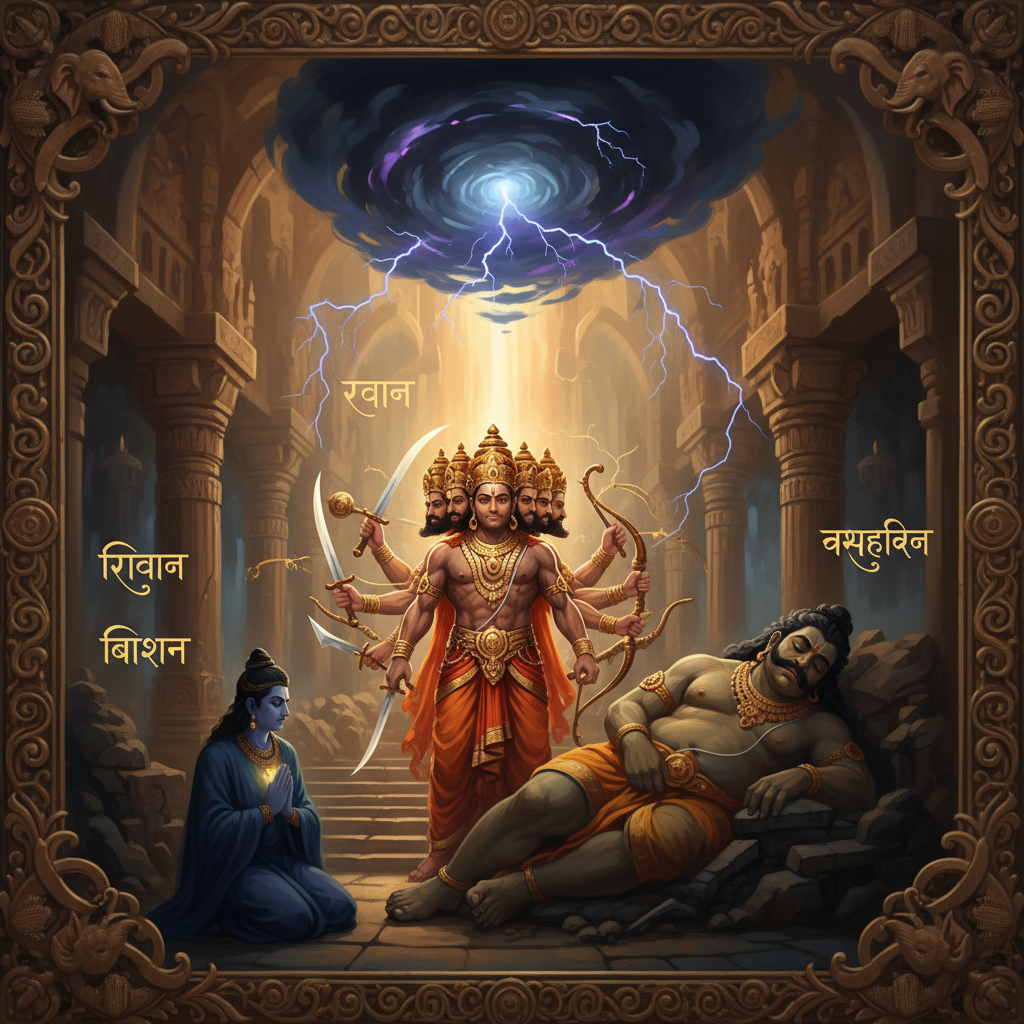
Sri Swami Jyotirmayananda, a direct disciple of Swami Sivananda, opens Doha 184 of the Tulsi Ramayana with an uncomfortable question. What if Ravana, Kumbhakarna, and Vibhishana were never really outside at all.
The Three Demons Living Inside You
In the storyline, three demon brothers rule the world: Ravana, Kumbhakarna, and Vibhishana. Sri Swami Jyotirmayananda reads them allegorically. 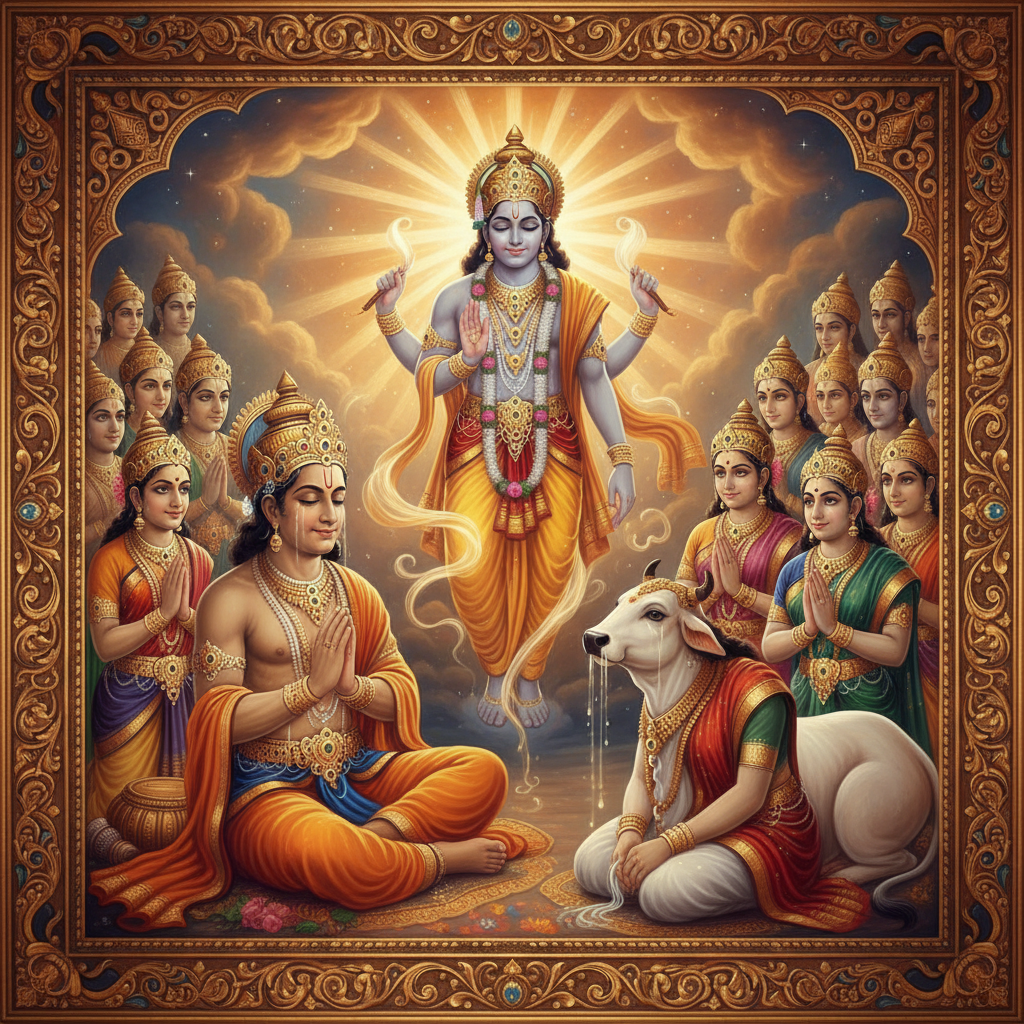
These are not distant mythological figures. They are three tendencies alive in every mind, competing for the same throne.
Where the Demoniac Qualities Come From
The Bhagavad Gita enumerates the demoniac nature, Asuri Sampat, succinctly: dambha (hypocrisy), darpa (arrogance), abhimana (conceit), krodha (anger), and parushya (harshness in conduct). Sri Swami Jyotirmayananda traces every one of them to a single root: ajnana, ignorance. Ravana’s empire of three worlds is, in mystic terms, the domination of these qualities over your own physical, emotional, and intellectual planes.
Meghnad. The Cloud That Hides in Your Mind
Ravana’s favorite son is Meghnad, whose name means “the sound of cloud.” Sri Swami Jyotirmayananda explains the allegory. The cloud is ashubha vasana, impure subtle desire, hovering over the mind and shooting out lightning without warning. One small vritti, one small thought, can summon an entire army of associations, the way a single search term returns thousands of results. Those who let these tendencies rule are called Nishichar, those who move comfortably in darkness. The instruction is simple. Come into satsanga. Begin to dissipate the ignorance. The demons within will have a much harder time.
The Three Blessings You Are Wasting
Before returning to the story, Sri Swami Jyotirmayananda names the three rarest blessings a soul can receive, drawn from the Vivekachudamani: Manushyatvam, a human birth. Mumukshutvam, the aspiration for liberation. Mahapurushasamshrayah, refuge in a great soul. Animals are bound to karma bhoga, they can only exhaust past actions, never exert real self effort. Only a human being can aspire, and only in the company of a true teacher does that aspiration ripen into freedom.
When the Earth Herself Could Not Bear It
The storyline resumes. Weighed down by Ravana’s tyranny, Mother Earth, Dhara, takes the form of a cow and goes weeping to the assembly of sages and gods. They can offer nothing. Together they travel to Brahmaloka, the world of the Creator, to plead for relief.
Even Brahma Could Not Help
Brahma listens, and admits the truth. His own creation only allows the soul the possibility of self effort. It cannot grant liberation. Not even the highest planes of Brahma’s world, however vast their happiness and power described in the Taittiriya Upanishad, can end the reach of Ravana. Brahma’s counsel is humble. Turn to Lord Hari. Worship his feet. He alone knows the pain of his devotees, and he alone will destroy every obstacle.
The Pilgrimage You Never Left Home For
When the assembled gods debate where to find the Lord, some propose Vaikuntha, others the Ksheer Sagar. Lord Shiva answers from his own experience. Hari abides equally in every heart and reveals himself only according to the depth of one’s love. He is Sarvavyapak, all pervading, homogeneously present the way salt dissolves evenly through water. Sri Swami Jyotirmayananda offers the teaching in its most practical form. God can meet you in your own bathroom as readily as on the banks of the Ganga. Man changa to kathauti mein Ganga, if the mind is pure, the Ganges is right there in your washbasin.
The Guru Is the Other Piece of Wood
How, then, does devotion actually ignite. Sri Swami Jyotirmayananda offers a simple image. Fire needs two pieces of wood rubbed together. You are one piece. The living teaching that comes from the guru is the other. Neither alone produces the spark. Together, devotion catches, and once it does, it never has to be searched for again.
Brahma’s Prayer. The Song That Made a God Weep
Lord Shiva’s counsel moves the entire assembly, and Brahma himself, so deeply that tears of joy stream from his four faces. What follows is the Stuti, Brahma’s prayer to Vishnu, one of the most celebrated hymns in the Ramayana. He praises Hari as the destroyer of demoniac forces, the shelter of those who take refuge, all pervading yet completely untouched, like the sun that illumines everything while remaining unaffected by what it touches. The lecture closes where all true seeking ends, in the peace of the Isha Upanishad’s invocation of fullness. That is whole, this is whole, from wholeness comes wholeness, and wholeness still remains.
Scholar’s Corner
From the Bhagavad Gita (4.7-4.8):
“Yada yada hi dharmasya glanir bhavati Bharata, abhyutthanam adharmasya tadatmanam srijamyaham… Paritranaya sadhunam vinashaya cha dushkritam, dharma samsthapanarthaya sambhavami yuge yuge.”
Whenever virtue declines and vice rises, I manifest myself, age after age, to protect the righteous, destroy the wicked, and reestablish Dharma.
From the Vivekachudamani (verse 3):
“Durlabham trayam evaitad devanugraha hetukam, Manushyatvam Mumukshutvam Mahapurushasamshrayah.”
Three things are rare, obtainable only by the grace of God: a human birth, the yearning for liberation, and the shelter of a great soul.
From the Isha Upanishad (invocation):
“Om purnam adah purnam idam purnat purnam udachyate, purnasya purnam adaya purnam evavashishyate.”
That is whole, this is whole, from that wholeness this wholeness comes. Take wholeness from wholeness, wholeness alone remains.
Glossary of Sanskrit Terms
- Ajnana
- spiritual ignorance, the root of every demoniac quality
- Vasana
- a subtle latent impression or desire shaping the mind
- Rajas, Tamas, Sattva
- the three fundamental qualities: restless activity, inertia, and clarity
- Asuri Sampat
- the demoniac nature described in the Bhagavad Gita
- Satsanga
- the company of the wise and the Truth
- Manushyatvam
- the blessing of human birth
- Mumukshutvam
- the intense aspiration for liberation
- Mahapurushasamshrayah
- taking refuge in a great soul or Guru
- Nishichar
- one who moves comfortably in the darkness of ignorance
- Sarvavyapak
- all pervading, present equally everywhere
- Satchidananda
- Existence, Consciousness, and Bliss absolute, a name for Brahman
Watch the full lecture
May the Grace of Sri Swami Jyotirmayananda dissolve every demon of ignorance within you.
This study guide is drawn from the archived teachings of Sri Swami Jyotirmayananda.