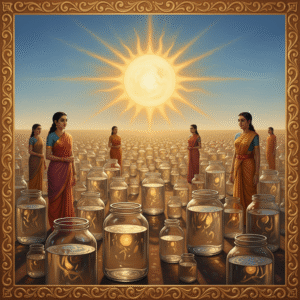
Tulsi Ramayana 95: The Stillness Behind Every Thought Wave

Nothing large happens in this lecture. A girl wanders ahead of her companions into a garden, sees two princes, and runs back to tell her friend. Sita goes to look. Rama, picking flowers for his teacher’s worship, hears her bangles before he sees her, and when he does see her, his eyes stop blinking.


Read More »

Yoga Vasistha 193: The Self Cannot Be Confined in the Mind

Sage Uddalaka is not yet realized when this section of the Yoga Vasistha finds him. That is the point of reading him. Swami Jyotirmayananda presents what follows as a sample of how inquiry is actually practiced by someone still on the way, and he is plain about its subject. The inquiry is not into t

Read More »

Yoga Vasistha 192: Uddalaka Reasons With His Own Mind

Sage Uddalaka is not a beginner. The Yoga Vasistha is careful to say so, and Swami Jyotirmayananda is careful to repeat it, because what happens to Uddalaka in this lecture is the thing beginners assume only happens to beginners. His mind is shaken like a tree uprooted in a storm. He falls into a lo

Read More »

Raja Yoga Sutras 17: The Nine Obstacles on the Path

Patanjali spends one sutra naming the nine things that stop a practice, and Swami Jyotirmayananda spends most of an hour on them. Before naming one, he removes the assumption that naming is the cure. You do not get rid of an obstacle because you have learned what it is called. Knowing is the beginni

Read More »

The Devotee Krishna Calls Dearest

Seven days ago Swamiji read the sixteenth verse of the seventh chapter and named the four kinds of people who turn to God. He comes back to it at the start of this class and says why: “because of its importance, I’m reiterating this verse.” The second reading is not a repetition. The first one named

Read More »

Tulsi Ramayana 94: Why Every Path of Wisdom Ends in Play

There is a moment in this class where the whole architecture of the Ramayana quietly inverts. Rama, who is Brahman, under whose governance maya assembles entire universes in an instant, is being led around a building site by a group of children who have decided He does not know very much. They point

Read More »

Knowing You Are Not the Ego Is Not Freedom

Rama has been answering a question nobody quite asked him. Vishvamitra came to King Dasharatha’s palace for a practical reason: he needed Rama and Lakshmana to protect a yajna. What he got instead was a young prince who had turned so far inward that the court had to ask him what was wrong. Rama’s re

Read More »

Ahamkara: Why the Ego Blocks Every Purpose of Life

Section 15 of the Vairagya Prakarana carries a title that sounds almost comic until you sit with it: Ahamkara-jugupsa, finding fault with one’s own ego. Jugupsa is the word for gossiping against something, speaking ill of it behind its back. The section is Rama gossiping against his own egoism, at l

Read More »

Raja Yoga Sutras 16: Japa, and the Feeling Behind the Mantra

Almost everyone who has tried a mantra has had the same experience. You repeat the words. Nothing appears to happen. You conclude, quietly and without saying it to anyone, that this particular door is closed to you. Sutra 28 of the Samadhi Pada anticipates that conclusion and refuses it. Patanjali’s

Read More »

The Four Kinds of Devotee, and What Unites Them

Bhagavad Gita, Chapter 7, verses 14 through 16, in Swami Jyotirmayananda’s commentary of May 31, 2015. This lecture is about the difference between understanding something and being changed by it, and it opens by refusing to let the first stand in for the second. You can gather every illumination th

Read More »

The Merchant Who Bought a Dead Horse

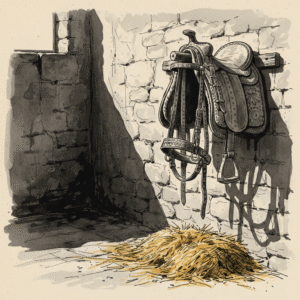
A man travels to Arabia to buy the finest horse in the world. The seller, a famous dealer, tells him he has the best horse anyone could imagine, and then spends a full hour proving it: the nose, the ears, the mane, the legs. Nothing in the description is false. At the end of the hour the buyer asks

Read More »