
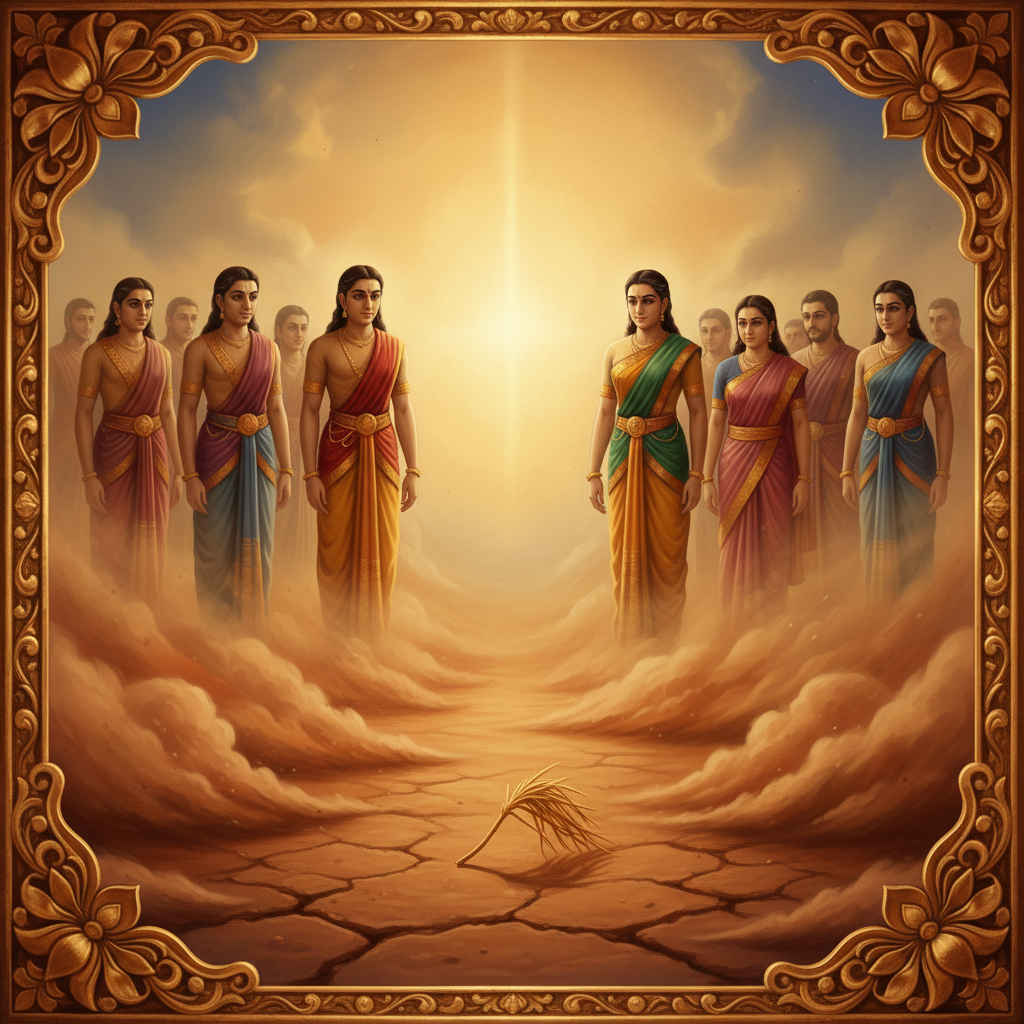
The seventh chapter of the Gita has been climbing toward a single verse, and this class begins on it. After many lives of progressive evolution, Krishna says, one acquires wisdom and worships Him with the vision that Vasudeva alone is all that exists, and such a great soul is extremely difficult to find. Swamiji calls it the picture of perfection. Then he spends the next three quarters of an hour on the far more common case: the person who worships, sincerely, and is aimed at something smaller. That is the real subject of verses 20 to 25, and Swamiji reads them with unusual generosity. The Gita names “other gods” here, and a careless reading turns that into a verdict on people who pray to Ganesha before a journey or to Hanuman before an obstacle. Swamiji turns it the other way. The line he draws is not between one deity and many. It is between worship aimed at God and worship aimed at the things God might hand you, and a person who insists on one God can be standing on the wrong side of it. Before he reaches those verses, he does something the chapter does not ask him to do. He takes the vision of verse 19, that God is all that exists, and asks what it does to the way you treat an enemy. The answer comes through two lines of Saint Kabir and a story about water given in secret, and it is the most practical passage in the class. The lecture opens on that story before the invocation, and it closes on a sky that is not there. So the class moves in three stages. First, conduct: merit and sin, the sick mind, and Kabir’s flowers. Second, worship: other gods and the God, the crack in the window, and faith as the force that widens it. Third, the limit of form: a story from the Kena Upanishad in which the gods discover whose power they have been using, and the two closing verses on the veil of yogamaya.
Passage index
- 00:00 “And that’s the best revenge”
- 01:47 Verse 19: Vasudeva alone is all
- 04:55 Merit, sin and the sick mind
- 08:45 Kabir: flowers for the one who sows thorns
- 12:18 Three ways to reach a difficult person
- 14:39 Kabir’s trident: three illusions removed
- 17:18 Verse 20: other gods and the God
- 25:18 A crack in the window
- 26:25 Verse 21: faith, strength and samadhi
- 35:40 Verse 22: the deity is a channel
- 36:52 Kena Upanishad: the straw and the wind
- 40:56 Verses 23 to 25: veiled by yogamaya
Verse 19 and the many lives behind it
The verse speaks of many lives, and Swamiji’s first concern is that the number not become a source of anxiety. The mind should not go into mathematical accounts, he says, or be pressured by how many lives remain. The lives behind you have already been lived. “There wasn’t a time when you were not there, but not in this body.” What you are now is the sum of lessons learned from life to life, many of them learned before you had adopted any path that pointed directly at liberation. The great soul of the verse is extremely difficult to find, and he is careful about how that sentence lands. It is not a discouragement. “This, this is the purpose of your existence.” The rarity describes the summit; it does not disqualify the climber.
Merit, sin and the sick mind
Every human being begins in karma, by thought, word and deed, and no one exists without it. Karma divides two ways. Punya karmas, meritorious deeds, keep a person on solid ground and let them progress. Papa karmas are what people perform with a sick, distorted mind, and Swamiji’s example is pointed: the idea that those who do not worship God your way must be tortured or destroyed, and that this would please God. He calls it the dramatization of a very gross element. Such karma leads to what the scriptures call demoniac births, and he defuses the image immediately. “Demonic doesn’t literally mean that you come with two horns.” A person can be handsome and well spoken and still be a rakshasa inside. And the world will always hold such people, which Swamiji says is fortunate. “No one will advance on the spiritual path if the person does not have challenges.” The challenges come from those at a lesser level. What you are, spiritually, is decided by how you deal with them.
Kabir: flowers for the one who sows thorns
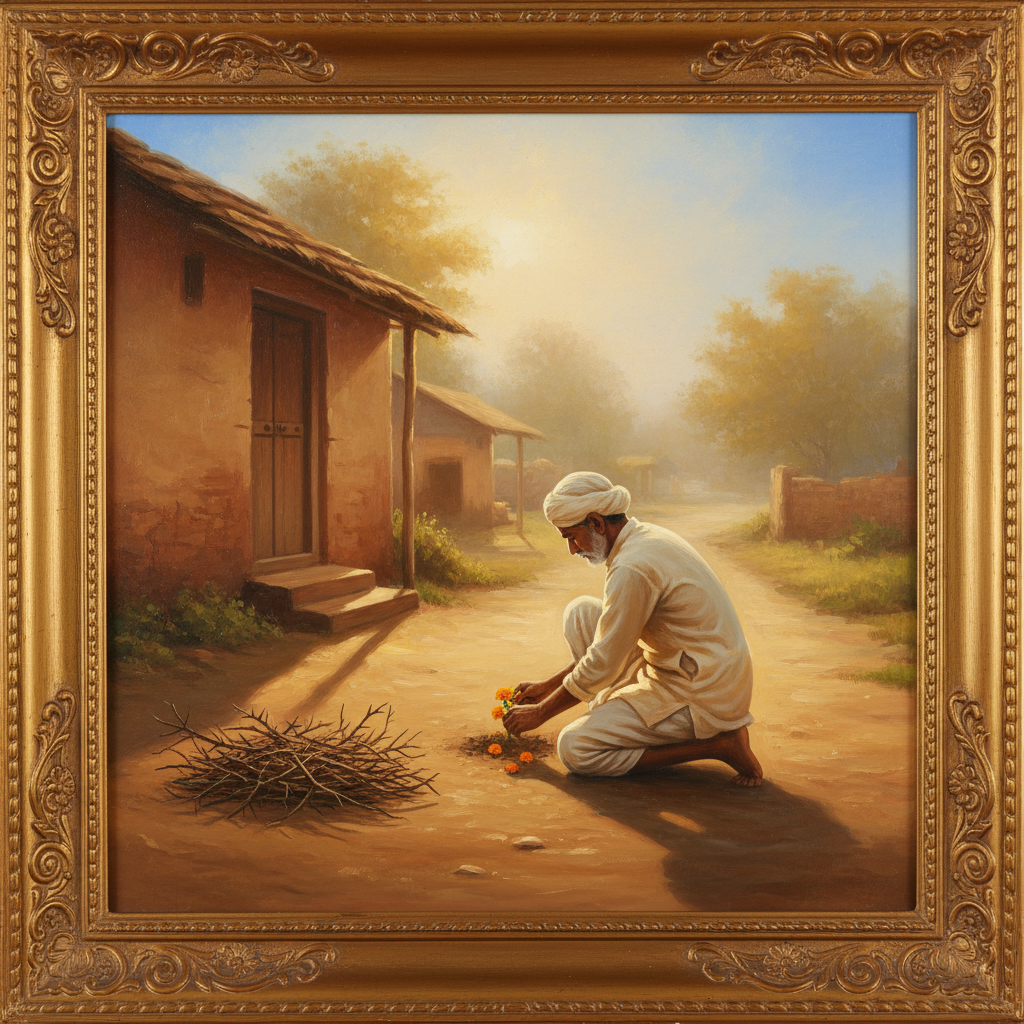
The teaching he reaches for is two lines of Saint Kabir. The negative personalities are always ready to put thorns in your way. When you realize that someone has, Kabir says, wait, and in secret go and plant flowers for them. Swamiji grounds this in a diagnosis rather than a sentiment. “You must understand the person who gives you trouble. Sick person.” “Already, all human beings are in a big hospital”, suffering from bhava vyadhi, the disease of the world process, and some are suffering a great deal. A doctor does not resent a patient for being in turmoil; the doctor looks for the cause and remedies it with good heartedness. Religion in its real spirit, he says, “never looks at people as sinners, as criminals.” It looks at them as souls evolving. The ordinary tendency runs the other way. You hold a grudge, wait for the opportunity, and repeat the mantra of a tooth for a tooth, until neither of you has any teeth left. He offers it as a joke, and then names the other level: having developed compassion, you wait for the opportunity to put the person in the right direction.
Three ways to reach a difficult person
If you protest that you have no way to do that, Swamiji says you have a subtler dimension than you think. You approach people in three ways. First, with words, telling them what to do. Where words are impossible, second, you exemplify it: instead of going on telling others to do good, you become good. And third, you turn to God. It is God’s creation, and the responsibility is not yours to carry. “Leave the responsibility in Divine hands.” “Be just an instrument.” With the mind set that way, the opportunity arrives. You find your enemy dying of thirst, and you give him water from behind, so he does not see you. He revives and says he wishes he could have seen and thanked the person who saved him. Then that person is shown to him. A different experience enters the heart, and the face he sees pinches it: why have I been so bad to this man? “And that’s the best revenge.”
Kabir’s trident: three illusions removed
The second line of the couplet promises flowers for you and a trident for your enemy. Swamiji admits it sounds cruel. “But trident means your enemy will improve.” The three points of the trishula are three illusions removed. The first is about himself: he is not the body and mind but spirit, divine. The second is about the world: it is not a giver of trouble but a divine support for his evolution. The third is about circumstance: pleasant and painful experiences alike have a divine purpose. When those three visions begin to develop, he is no longer the person he was, and his world is no longer the world he knew. That is the attitude of perfection the verse described. “Don’t see the world filled with enemies.” “You don’t live to revenge.” You radiate the aroma of cosmic love, and that, Swamiji says, is the great soul who is so hard to find.
Other gods and the God
Verse 20 says that those whose minds are overpowered by numerous desires are constrained by their own nature to worship other gods, by the rites belonging to those gods. Swamiji opens it with a question. “Can God be worshipped exactly in the same way by all people?” It cannot. For most people God becomes a source of desires fulfilled, support in adversity and strength in tragedy: a means to an end. That is sakamya bhakti, devotion with an object, set against nishkamya bhakti, devotion for God alone. There is no harm in the first; pain comes and we turn to God. But you should know that you are then worshipping other gods, not the God. Worship the God, and the mind is overwhelmed by divine love. “If your mind is a crow, Divine Love will make it a swan.” Then comes the reversal that gives the class its title. Worshipping other gods alongside Brahman, with right understanding, is no harm at all. “It’s just like you are dealing with flower and fragrance.” You set out on a trip and pray to Ganesha that things go well; you pray to Sarasvati to pass an examination; you pray to Hanuman to remove an obstacle. None of this contradicts worshipping the God, as long as you know they are the same God in different aspects. The danger lies on the other side. A mind can insist that God is only one and refuse every other form, and still confine its worship to little things: great God, crush my enemy. “Then you are not worshipping the God. You are worshipping other Gods.” You may worship hundreds of gods and be worshipping the one God, or worship only one God and not really be worshipping God at all. The same holds inside one tradition. You can worship Krishna or Rama for material wealth, and if wealth is the goal of life, that is worship of anya devata. Swamiji allows the request, as titbits along the way. The goal is divine communion, and the difference between taking the titbits for the goal and taking self-realization for the goal is the whole difference.
A crack in the window
Even then, the Gita does not look down on limited worship. “Worship is positive, no matter how limited.” “Even though you are opening your window, just a little crack.” The crack lets the outside expanse into the house. A person worshipping only for petty things is still having the heart opened to something more profound. Punya karmas create spiritual sensitivity, the sensitivity draws the person into satsanga, and satsanga whispers into the mind that the goal is liberation.
Faith, strength and samadhi
Verse 21 says that whatever divine form a devotee wishes to worship with faith, God makes that faith unflinching. The power of worship comes from the faith in it. “Faith is śraddhā.” It is of three kinds. Tamasika faith is set on revenge or some old grievance. Rajasika faith is display and vanity, inviting people over to show them your grandeur and giving them nothing. When the scriptures speak of faith, they always mean sattvika faith. Swamiji follows it through the sequence of Raja Yoga. Faith leads to virya, strength, the kind that makes life joyous, and it is not a matter of calories, almonds or peanuts, though he is careful not to upset the doctors. “Divine nutrition is a completely different thing.” It comes from japa, meditation, satsanga and love of God. Strength opens a mystic recall: the soul remembers that it is a ray of God and asks how it can become one with God. With that question, divine qualities begin to develop. You begin to compete with God: if God is kind, I will be kind. That recall leads to samadhi, an experience not defined by the nervous system, and the intellect that emerges from samadhi is prajna, intuitional intellect, which is enlightenment. The whole story begins with faith, kept nourished by satsanga, japa, being good to others and integral yoga. “But without faith, human beings have no face to show.”
The deity is a channel
Verse 22 says the devotee endowed with that faith worships the form, and obtains his desires, but it is God who, assuming the form of the deity, grants them. Swamiji traces what follows. Your worship succeeds; you pass the examination or cross the trial. Your mind should then understand that it was not the deity. “The deity is only an instrument; the deity is a channel of God.” Whether you understand this or not, God makes you understand. Faith in the deity intensifies, your concept of the deity changes, and whatever deity you began with, you begin to worship Brahman through it.
The straw and the wind
The point is elaborated in the Kena Upanishad, and Swamiji tells the story in full. The gods defeat the demons and hold a great celebration, each boasting of his part in the victory. To cure them of their vanity, Brahman appears before them as a yaksha, a strange being with many heads and many arms, and the gods look at one another, asking who it is. The wind god goes out to find out. He is no ordinary wind but cosmic prana, and he announces that he could blow the whole universe away. The yaksha sets down a single straw and tells him to blow it away. With all his huff and puff, he cannot. “The moral of the story: whatever the wind-god does is because of God.” The water god, who could sweep the world into a deluge, fares no better. Then Indra, ruler of the gods, sets out himself, and where the yaksha stood he finds a goddess, the deity of knowledge. She tells him that the being he wants to know is the one by whom the gods won their victory. So the gods learn that it was never their power that did amazing things, but the power of God working through them. What the Upanishad teaches, Swamiji says, the Gita brings forward.
Verses 23 to 25: veiled by yogamaya
Verse 23 states it plainly: those who worship other gods attain finite results and go to those gods, while God’s own devotees come to Him. Other gods are limited, so reaching them is not perfect attainment. You go to the wind god, and the wind god cannot blow away a straw. Verse 24 says that those without understanding take the unmanifest to have a human form, not knowing His higher nature, immutable and unsurpassed. “Names and forms are given to God, not by God, by human beings.” Sages gave them for symbolic purposes. To worship God in a temple is right; to believe God is in that temple and nowhere else, or in one statue and no other place, is the big obstacle to real religion. Verse 25 gives the reason: veiled by His yogamaya, He is not revealed to all. “God cannot be revealed, cannot come in the realm of senses.” Swamiji’s illustration is to look up. You see boundless space, veiled by a blue sky. “Maya because blue sky is not there.” It is not there, and it still veils, the way a snake that is not there makes a rope a great trouble. A deluded world wants to know reality only through the senses, and assumes that what it touches must be real. But you touch things in a dream too, and bite your own hand. “God is beyond mind, intellect, senses and ego.” That is His higher nature, unborn and imperishable, and the class closes on it with the peace invocation.
Terms
- anya devata — other gods; worship aimed at what God might give rather than at God, whatever the form
- sakamya bhakti and nishkamya bhakti — devotion with a personal object, and devotion for God alone
- punya karma and papa karma — meritorious deeds that keep a person on solid ground, and deeds of a sick, distorted mind
- bhava vyadhi — the disease of the world process, which every human being in the hospital of the world shares
- trishula — the trident; in Kabir’s couplet, the three illusions it removes, about oneself, the world and circumstance
- shraddha — faith; tamasika, rajasika or sattvika, and in scripture always the sattvika kind
- virya — the strength that faith produces, which no ordinary nutrition supplies
- prajna — the intuitional intellect that emerges from samadhi; enlightenment
- yaksha — the strange being in whose form Brahman appears to the gods in the Kena Upanishad
- yogamaya — the veiling power by which God is not revealed to the senses
- Vasudeva — He who resides in everyone; in verse 19, the vision that He alone is all that exists
For reflection
- When you pray, are you asking for the goal, or for one of the titbits along the way, and would you know the difference if both were granted?
- Who in your life has sown thorns for you, and what would planting a flower for them in secret actually look like this week?
- Where have you confined God to one name, one form or one place, and what did that confinement protect you from having to see?
About this lecture
Srimad Bhagavad Gita, Chapter 7, Jnana-Vijnana-Yoga, verses 19 to 25. Lecture 83 by Swami Jyotirmayananda, Yoga Research Foundation. The complete archive of Swamiji’s lectures is free to all.
This study guide is drawn from the archived teachings of Sri Swami Jyotirmayananda.